

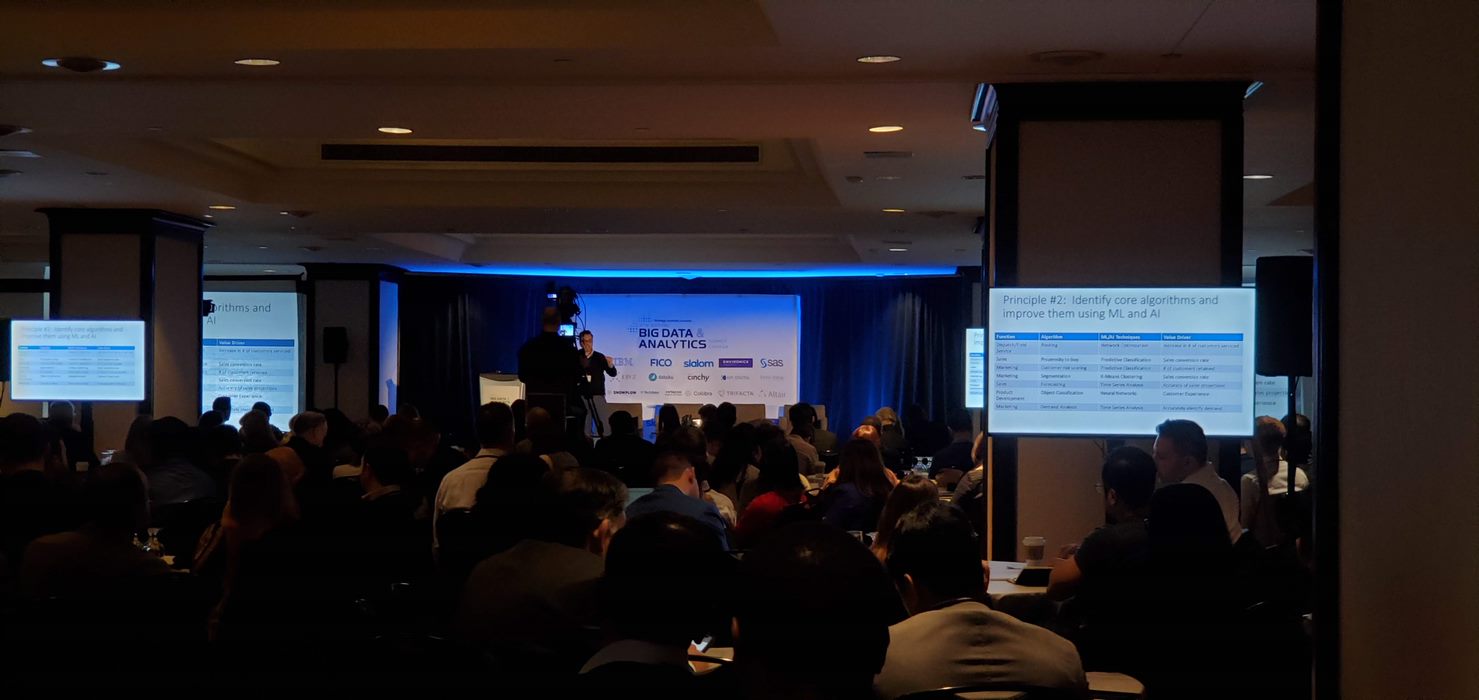
Big Data West Summit | Day 1:
7:45 am
NETWORKING BREAKFAST: BUILD COMMUNITY CONTACTS
- Start your day by connecting with enterprise data, analytics, and AI leaders.
- Source practical tips, discuss best practices, and prepare for the day ahead.
- Meet peers from Western Canada’s leading data-driven organizations.

8:45 am
OPENING COMMENTS FROM YOUR HOSTS
Gain insight into today’s sessions so you can get the most out of your conference experience.

9:00 am
OPENING C-SUITE PANEL: FROM DATA STRATEGY TO EXECUTION
How to Lead Through the AI Infrastructure Shift
Organizations have invested heavily in cloud, analytics, automation, and modernization initiatives, yet still struggle to align architecture, governance, talent, and business priorities. As AI capabilities evolve, your competitive advantage needs to be fine-tuned. Adopt best practices to:
- Align data, analytics, and AI investments directly to enterprise growth and operational priorities.
- Perfect and design operating models that integrate engineering, governance, analytics, and AI.
- Adopt modernization initiatives that deliver measurable business value while remaining adaptable to future AI.
- Master organizational structures that reduce fragmentation and accelerate enterprise-wide adoption.
Transform your disconnected data initiatives into scalable enterprise execution.



9:30 am
SPEED NETWORKING: MAKE MEANINGFUL CONNECTIONS
- Enjoy a quick icebreaker, exchange contact details, and build lasting business relationships.
- Achieve your conference networking goals in a structured and engaging format.
- Join a community of data leaders, builders, and decision-makers.

10:00 am
INDUSTRY EXPERT: AGENTIC AI
The Agentic Paradox: Why More Autonomy Demands More Control
Agentic AI is rapidly changing how work gets done. Systems that can reason, plan, and act autonomously are increasing individual productivity at unprecedented speed, yet many enterprises are struggling to translate that autonomy into scalable business value. As AI agents proliferate, organizations are running into a familiar tension: centralization provides trust, governance, and control but slows innovation, while decentralization unlocks speed and creativity but fragments accountability, data quality, and outcomes. Agentic AI exposes the limits of both approaches. Resolve the autonomy–control tension with practical approaches to:
- Design a core operating model that centralizes trust, governance, and data foundations while enabling autonomy at the edge where agents operate.
- Establish clear control mechanisms for agentic systems, including context inheritance, permissions, and accountability, without constraining innovation.
- Align data, platforms, and operating models so agentic AI can scale consistently across teams, use cases, and markets.
Enable agentic AI to deliver enterprise-scale impact by pairing autonomy with strong foundations that provide trust, context, and control where it matters most.

10:30 am
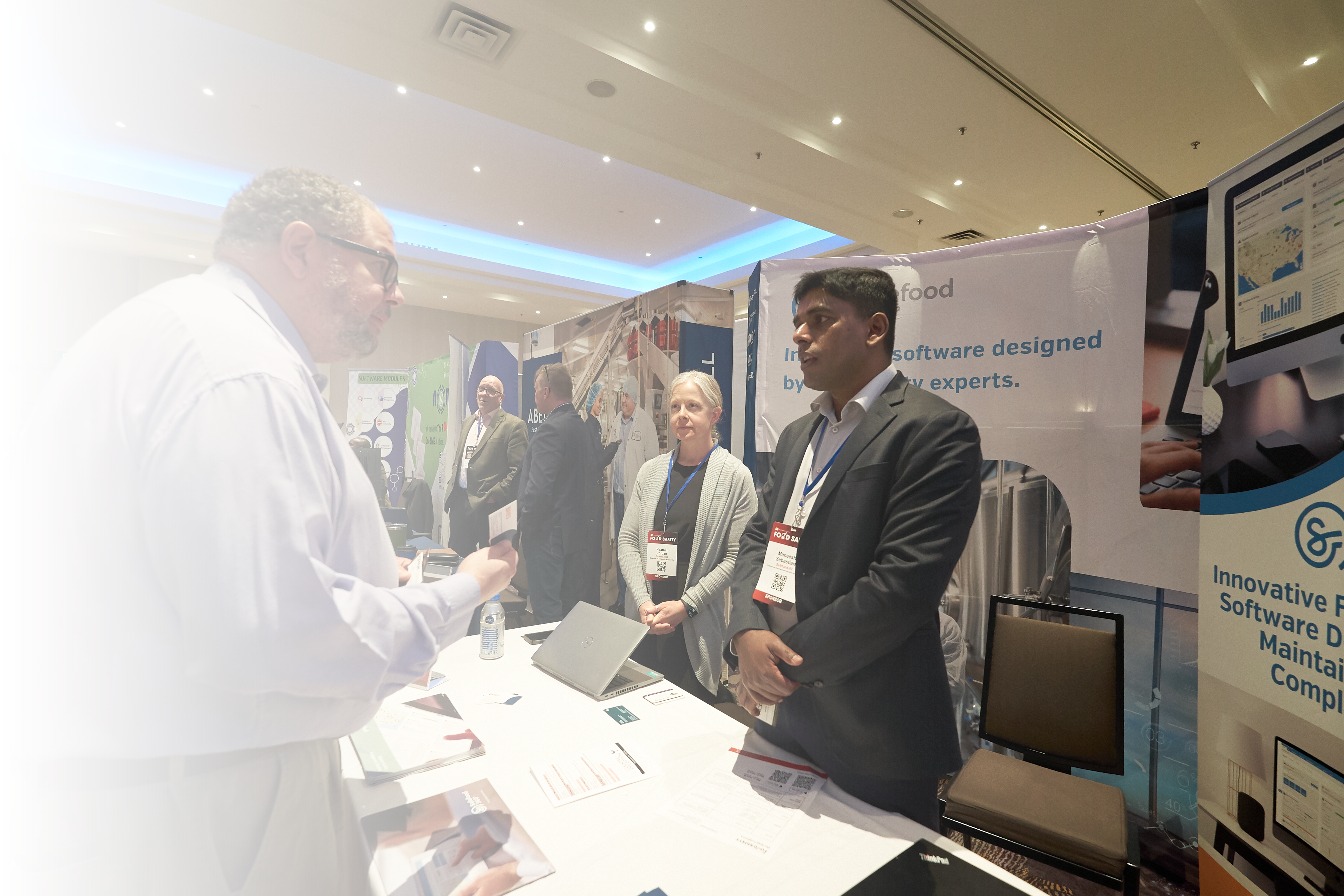
EXHIBITOR LOUNGE: VISIT BOOTHS & SOURCE EXPERTISE
- Explore the latest data analytics technology and strategies with industry-leading sponsors.
- Share your challenges with innovators across the data, AI, and cloud ecosystem.
- Schedule one-to-one private meetings for personalized advice.
11:00 am
KEYNOTE: AI
From Fragmented Data to a One Citizen View: Transforming Cancer Care Through Connected Data and AI
Healthcare organizations continue to struggle with fragmented patient records, disconnected clinical systems, and incomplete visibility across care journeys. While cancer registries have historically served as important repositories for surveillance and reporting, many remain limited by inconsistent data capture, siloed information sources, and static historical records that restrict their operational value. As healthcare systems pursue more connected, patient-centred models of care, organizations must strengthen foundational data quality while building integrated ecosystems capable of supporting clinical insight, operational planning, and improved patient outcomes. Develop a roadmap for:
- Strengthening cancer registry data quality through AI-enabled approaches that improve data capture, structuring, validation, and operational efficiency.
- Integrating clinical and operational data across previously disconnected systems to create a more complete understanding of patient pathways and outcomes.
- Transforming static registries into dynamic, connected data assets that support real-time insight, planning, and coordinated care delivery.
- Embedding AI within broader data modernization and workflow transformation initiatives rather than treating it as a standalone technology solution.
Improve patient-centred care, strengthen clinical decision-making, and create connected healthcare data ecosystems that enable more coordinated and insight-driven outcomes.
11:30 am
INDUSTRY EXPERT: THE CONTEXT LAYER
Tokenomics: Turning AI Spend Into Business Value
As generative AI moves from experimentation into enterprise deployment, organizations are discovering that AI consumption can scale far faster than the value it creates. Tokens, model choices, inference volumes and increasingly agentic workflows introduce a new layer of technology economics that leaders need to understand. The challenge is no longer simply proving that AI works, but designing and operating AI solutions where the cost of intelligence remains proportionate to the business value it generates. Walk away with a roadmap to:
- Measure the true cost of AI use across models, tokens, infrastructure and workflows, connecting consumption to individual use cases and business outcomes.
- Optimize AI economics by selecting the right models, architectures and levels of intelligence for different tasks rather than automatically deploying the most powerful—and expensive—option.
- Establish governance and accountability for AI consumption so teams can experiment and scale while continuously measuring whether increased spend translates into measurable value.
Improve AI ROI, control rapidly growing technology costs and scale innovation sustainably by treating AI consumption as an investment that must continuously earn its place.



12:00 pm
USE CASE: GOVERNANCE
Out of the Darkness: BCLC’s Path to Governed, Self-Serve Data
For years, some of BCLC’s most important business logic was effectively hidden inside its BI environment. Moving from on-premise infrastructure to the cloud exposed a bigger challenge: modernization required not simply migrating technology, but making critical data logic visible, governed and reusable. Discover how BCLC rebuilt this foundation to support a broader transition toward trusted self-service analytics and AI readiness. Walk away with a roadmap to:
- Extract and rebuild business logic trapped within legacy BI environments so critical knowledge becomes visible, understandable and reusable across the organization.
- Establish governance, metadata and ownership around modernized data assets so employees can confidently discover, understand and use trusted information without depending on specialist teams.
- Use cloud modernization as an opportunity to create a governed self-service data foundation capable of supporting analytics today and increasingly sophisticated AI use cases tomorrow.
Increase analytics productivity, accelerate AI innovation and reduce the cost and risk of legacy complexity by turning hidden business logic into governed, reusable enterprise data.

12:30 pm
NETWORKING LUNCH: DELVE INTO INDUSTRY CONVERSATIONS
- Meet speakers and peers working through similar data, AI, and governance challenges.
- Expand your network and make connections that last beyond the conference.
- Enjoy lunch while continuing conversations from the morning sessions.

1:30 pm
EXHIBITOR LOUNGE: VISIT BOOTHS & WIN PRIZES
- Explore sponsor demos, discuss organizational hurdles, and source practical advice.
- Enter your name for a chance to win exciting prizes.
- Take advantage of event-specific offers and special content.

1:45 pm
CASE STUDY: AI ADOPTION
The AI Trust Flywheel- How AI Governance and AI Adoption Reinforce Each Other at Enterprise Scale
Most enterprises treat AI governance and AI adoption as opposing forces — one slows things down to manage risk, the other races ahead to capture value. At The Wawanesa Mutual Insurance Company, these have been deliberately built as two halves of the same engine: a risk-proportionate governance framework that scales its scrutiny to the size of the risk, paired with a grassroots adoption model that has accelerated enterprise-wide AI adoption, while keeping trust, and regulators, on side. Learn how governance built for real use, not just policy compliance, becomes the very thing that lets adoption scale safely and fast. Build a roadmap to:
- Design a risk-proportionate governance model that fast-tracks low risk AI use while reserving deep scrutiny for high-impact systems.
- Move governance from a static policy document to a living practice — an AI System Registry, intake workflow, and oversight committee that stays current as new tools and agents emerge.
- Mobilize an AI Champion network that builds trust and literacy from the ground up.
Measure what actually matters — shifting from activation counts to embedded behavior change, feeding adoption insights back into evolving governance thresholds.

1:45 pm
CASE STUDY: ALWAYS ON AI
Stateful Agents for Token-Efficient Autonomous Experimentation
As AI agents take on longer and more autonomous workflows, repeatedly feeding them their entire history becomes increasingly expensive and inefficient. Drawing on his research into Stateful ReAct agents, Faramarz Jabbarvaziri explores a different architecture: enabling agents to maintain and curate persistent state so they can continue experimenting without repeatedly reconstructing everything that came before. Walk away with a roadmap to:
- Design stateful AI agents that preserve the information they need across iterations rather than repeatedly consuming an ever-growing conversation history.
- Understand how context engineering, persistent state and agent architecture can dramatically reduce token consumption while maintaining the quality of autonomous experimentation.
- Apply these principles to longer-running agentic workflows where AI systems need to experiment, learn from previous results and determine what to try next with limited human intervention.
Reduce AI operating costs, enable longer autonomous workflows and improve the scalability of agentic systems by designing agents that remember rather than continually re-read.

2:15 pm
TRACK SESSION: RESPONSIBLE AI AT SPEED
How to Govern Autonomous Systems Without Slowing Innovation
Organizations often struggle to balance innovation speed with growing pressure around compliance, transparency, accountability, and stakeholder trust. Perfect how your enterprise can embed governance directly into delivery pipelines and operating models so teams can move faster without increasing operational or regulatory risk. Adopt best practices to:
- Enhance operational governance controls directly within engineering and AI delivery workflows.
- Transform and balance experimentation with transparency, accountability, and compliance requirements.
- Improve and scale AI initiatives while maintaining stakeholder confidence and enterprise trust.
- Reduce governance friction through automation, policy-as-code, and standardized controls.
Create governance models that accelerate your enterprise’s adoption instead of bureaucracy.




2:15 pm
PANEL SESSION: NO MORE BROKEN PIPELINES
AI Adoption in the Real World: Lessons from Industry Leaders
AI strategies are easy to describe; successful adoption is much harder to deliver. In a fast-paced series of Pecha Kucha-style presentations, Vancouver Analytics Board Legends Award winners share candid lessons from putting AI into practice across different organizations and industries. Move beyond polished transformation stories to discover what actually accelerated adoption, what created friction and what these leaders would do differently next time. Walk away with a roadmap to:
- Identify the organizational, data and technology conditions that have enabled AI initiatives to move successfully from experimentation into everyday use.
- Learn from the obstacles, missteps and course corrections experienced by leaders implementing AI within real-world organizational constraints.
- Apply practical lessons across leadership, workforce adoption, governance and implementation to accelerate AI initiatives within your own organization.
Accelerate AI adoption, reduce costly implementation mistakes and increase returns on AI investment by learning directly from leaders who have already navigated the realities of transformation.



2:45 pm
INDUSTRY EXPERT:
AI Has Never Been Easier to Build, Yet Harder Than Ever to Scale
AI has never been easier to build, yet many organizations still struggle to move promising initiatives into production. The bottleneck is increasingly not the model itself, but the fragmented data, duplicated logic and repeated governance work sitting behind it. Every new use case that rebuilds these foundations increases cost and complexity. Reusable enterprise capabilities can turn one-off AI projects into an architecture designed for scale. Walk away with a roadmap to:
- Build reusable data, governance and business-logic capabilities that can support multiple AI applications rather than rebuilding the foundation for every new use case.
- Standardize how trusted data is discovered, accessed and validated so teams can move from experimentation to production faster while maintaining appropriate controls.
- Design an enterprise architecture that reduces duplication and complexity while allowing new models, agents and AI capabilities to be introduced as technology evolves
Accelerate AI deployment, reduce development costs and increase returns on AI investment by building trusted foundations once and reusing them across the enterprise.

3:15 pm
EXHIBITOR LOUNGE: ATTEND VENDOR DEMOS & CONSULT INDUSTRY EXPERTS
- Experience the next level of data and AI innovation firsthand.
- Meet one-on-one with solution providers to discuss organizational hurdles.
- Brainstorm solutions and gain new perspectives.

3:45 pm
INDUSTRY EXPERT
Living on the Edge: Taking Enterprise Data and AI Beyond the Data Centre
How do you deliver enterprise-grade data and AI capabilities when critical operations extend far beyond the traditional data centre or cloud? Drawing on a recent IBM and Pellera engagement with a Canadian federal public safety organization, explore how IBM watsonx.data and Cloud Pak for Data, deployed on IBM Fusion HCI, can enable data interoperability across regional and field environments while creating a scalable foundation for future AI. Walk away with a plan to:
- Deploy IBM watsonx.data and Cloud Pak for Data on IBM Fusion HCI to bring enterprise data and analytics capabilities into remote, distributed and edge environments.
- Enable multi-national data interoperability while maintaining the resilience, governance and control required across complex and varied operational landscapes.
- Use Red Hat OpenShift and Ansible to simplify deployment and management across distributed environments while creating a flexible platform that can easily incorporate additional AI capacity as requirements evolve.
Improve operational decision-making, strengthen data interoperability and accelerate AI readiness by extending a trusted, scalable data and AI platform from the enterprise to the edge.

3:45 pm
INDUSTRY EXPERT: ZERO-TRUST DATA PIPELINES
How to Secure AI Infrastructure Across Hybrid Environments
Organizations must secure sensitive training, inference, and operational data without slowing analytics delivery or AI development. The next generation of your enterprise AI requires pipeline-level security models that will distribute infrastructure at scale. Source practical tips to:
- Enhance secure data pipelines across hybrid and multi-cloud environments.
- Increase sensitive training and inference data throughout AI workflows.
- Reduce vendor, integration, and third-party operational risk.
- Amplify scalable zero-trust architectures for modern AI infrastructure.
Create secure foundations for your next generation of enterprise AI systems.
4:15 pm
CASE STUDY: DIGITAL TRANSFORMATION
Keeping Innovation Alive: What It Really Takes to Scale Data and AI in a Traditional Enterprise
Building a digital, analytics and AI program inside a large, asset-heavy organization is rarely a linear transformation. Legacy technology, operational complexity, competing priorities and pressure to demonstrate value can make sustaining momentum as difficult as starting it. Drawing on the lessons, missteps and course corrections of a multi-year transformation, explore why organizations may not need to become completely “AI ready” before they begin — and how working with AI can itself accelerate the journey toward readiness. Walk away with a roadmap to:
- Build and sustain momentum for data, analytics and AI by connecting innovation to real operational problems and demonstrating value incrementally rather than waiting for perfect enterprise foundations.
- Navigate the missteps, changing priorities and organizational resistance that inevitably emerge during transformation, adapting the program without losing long-term direction or executive support.
- Use AI as part of the transformation itself — accelerating development, exposing gaps in data and processes, and helping the organization discover what “AI ready” actually needs to mean in practice.
Accelerate innovation, improve operational efficiency and increase returns on technology investment by turning AI readiness from a destination into a continuous process of learning, experimentation and improvement.

4:15 pm
CASE STUDY: AI SYSTEMS
Agentic Decision Systems — How to Build Efficient and Reliable Deterministic AI Systems
As organizations move from AI that generates answers to agents that make decisions and take actions, reliability becomes critical. Purely probabilistic systems can introduce inconsistency, unnecessary model calls and unpredictable behaviour into workflows where outcomes need to be repeatable and controlled. Explore how deterministic logic, structured workflows and agentic AI can work together to create decision systems that combine the flexibility of AI with the reliability required for production environments. Walk away with a roadmap to:
- Determine where probabilistic AI adds value and where deterministic rules, workflows and decision logic should maintain control.
- Design agentic systems that constrain actions, validate outputs and create predictable paths for high-impact decisions while still allowing AI to handle ambiguity and complex information.
- Reduce unnecessary model calls, token consumption and computational overhead by using AI selectively within efficient, purpose-built decision architectures.
Reduce AI operating costs, increase reliability and accelerate production adoption by combining the intelligence of AI agents with the predictability of deterministic systems.

4:45 pm
CLOSING KEYNOTE: RESILIENCE
Work Death Balance: When Leadership, Ambition and Survival Collide
In demanding leadership roles, success is often measured by the challenges we overcome, the innovations we deliver and the people who depend on us. But what happens when the relentless pressure to get things done comes at the expense of our own health and well-being? Drawing on his deeply personal experience of a life-threatening cardiac event while navigating extraordinary professional responsibilities, Gerry shares a powerful and confronting perspective on leadership, resilience and the true cost of an always-on work culture. Walk away with a roadmap to:
- Recognize how the pressure to deliver, manage risk and meet competing expectations can gradually normalize unsustainable workloads and put personal well-being at risk.
- Challenge the leadership mindset that equates commitment with personal sacrifice, exploring how to establish healthier boundaries without compromising accountability or organizational performance.
- Rethink what resilience and success really mean by building teams and leadership practices that protect people, distribute responsibility and sustain performance through periods of extraordinary pressure.
Build healthier leadership cultures, strengthen organizational resilience and sustain long-term performance by recognizing that no professional achievement should come at the cost of your life.

5:15 pm
CLOSING COMMENTS FROM YOUR HOST
Review the key solutions and takeaways from today’s sessions. Source a summary of action points to implement in your work. Discuss tomorrow’s highlights!
5:30 pm
EVENING RECEPTION: ENJOY GREAT CONVERSATION, MUSIC & NETWORKING
- Relax and unwind with peers after a full day of learning.
- Continue conversations with sponsors, speakers, and delegates.
- Make dinner plans with your new connections and explore the best of what Vancouver has to offer.

6:30 pm