
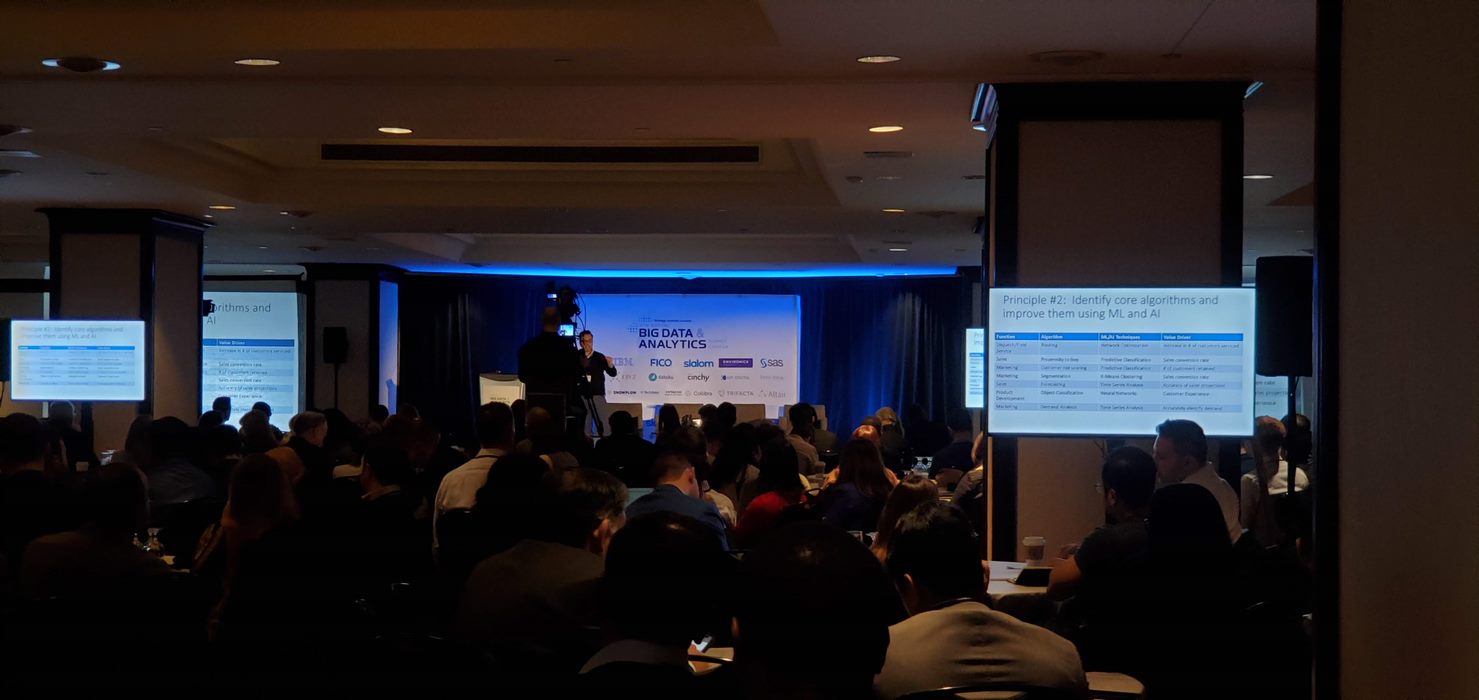
Big Data West Summit | Day 2:
7:45 am
NETWORKING BREAKFAST: BUILD COMMUNITY CONTACTS
- Reconnect with peers and continue conversations from Day 1.
- Prepare for a day focused on foundational data excellence and AI transformation.
- Source practical tips, compare common challenges, and build new connections across Western Canada’s data community.

8:45 am
OPENING COMMENTS FROM YOUR HOST
Gain insight into today’s sessions and the afternoon track structure, so you get the most out of your conference experience.
9:00 am
OPENING PANEL: TECHNICAL EXCELLENCE
From Documents to Data: Turning Unstructured Information into Actionable Intelligence
Public sector organizations hold enormous volumes of valuable information locked inside documents, forms and legacy records. Extracting this information manually is time-consuming, while conventional automation often struggles to interpret complex content consistently. Drawing on a digitization engine prototyped by Aman Sidhu at the City of Vancouver, explore how ontologies, automated extraction and human review can work together to transform unstructured documents into reliable, machine-readable JSON. Walk away with a roadmap to:
- Use ontologies to define the relationships, entities and business rules needed to extract consistent, structured information from diverse document types.
- Combine automated document processing with human-in-the-loop validation to resolve ambiguity, improve accuracy and maintain confidence in the resulting data.
- Transform extracted information into standardized JSON that can be integrated into operational systems, analytics platforms and emerging AI applications.
Reduce manual processing costs, improve data accessibility and accelerate public sector innovation by transforming previously inaccessible documents into trusted, reusable data assets.

9:30 am
INDUSTRY EXPERT: STREAMLINING EVERYTHING
How to Design Real-Time Analytics for Operational Advantage
Enterprises increasingly need event-driven architectures that connect operational systems directly to business decisions as conditions change. Real-time analytics is becoming a foundational capability for your organization’s continuous intelligence across operations, customer experience, and automation. Leave with a framework to:
- Master event-driven analytics pipelines that connect operational, transactional, customer, and machine data streams in real time.
- Adapt operational systems to decision workflows so insight can trigger action.
- Achieve low-latency architectures that support streaming analytics, real-time feature engineering, and AI-driven decisioning.
- Improve reliability through observability, lineage, and automated monitoring.
Shape your outcomes through continuous intelligence and real-time enterprise execution.
10:00 am
ROUNDTABLES: DISCOVER THOUGHT-PROVOKING IDEAS
Take a deep dive into your strategy, share common challenges, and exchange best practices with peers working through similar data, analytics, and AI challenges.
- Synthetic Reality: Building safer AI with synthetic data and privacy engineering.
- Enterprise Memory: Knowledge graphs and ontologies for trusted AI.
- Generative AI Beyond Chatbots: Delivering enterprise ROI in production.
- Self-Service Analytics That Actually Gets Used: Turn data curiosity into business impact.
- Third-Party AI Risk and Foundation Model Governance: Establish clear oversight of foundation models and third-party AI providers.
10:45 am
EXHIBITOR LOUNGE: VISIT BOOTHS & SOURCE EXPERTISE
- Explore sponsor solutions, discuss challenges, and schedule one-to-one consultations.
- Share your organization’s data, AI, analytics, and governance priorities with leading solution providers.
- Source practical expertise to support platform modernization, trusted analytics, and AI transformation.

11:15 am
PANEL: FROM AI PILOT TO ENTERPRISE CAPABILITY
What Separates Organizations That Scale AI From Those That Don’t- A West Coast Perspective
Almost every organization has experimented with AI, yet relatively few have successfully embedded it into core business operations. While early pilots often demonstrate technical promise, many stall before delivering meaningful enterprise value due to fragmented governance, unclear ownership, poor integration with business processes, limited change management, and difficulty measuring outcomes. The organizations pulling ahead are treating AI not as a collection of isolated use cases, but as an enterprise capability supported by trusted data, scalable operating models, strong governance, and executive alignment. Develop a blueprint to:
- Identify the operating model, governance structures, and leadership practices required to scale AI beyond isolated pilots.
- Integrate AI into business workflows, decision-making processes, and enterprise platforms to drive measurable operational value.
- Build organizational capabilities that support adoption through change management, workforce enablement, and cross-functional collaboration.
- Measure, communicate, and continuously improve AI performance through clear business outcomes, governance, and value realization frameworks.
Turn isolated AI experiments into enterprise capabilities that deliver sustainable competitive advantage, measurable business outcomes, and organization-wide adoption.




11:15 am
PANEL: SOVEREIGN AI
How to Build Canada’s Sovereign and Innovative AI Future
As Canada accelerates investment in sovereign AI infrastructure there are challenges. Identify how to reduce dependence on global technology providers without slowing innovation. Walk away with a blueprint to:
- Optimize the trade-offs between sovereign infrastructure and global cloud platforms.
- Advance investments in computers, trusted data, and AI capability across government.
- Align municipal, provincial, and agency AI strategy with national policy, security, and economic objectives.
- Perfect resilient ecosystems that can rapidly adjust to change.
Design an AI strategy that strengthens national capability while enabling innovation at scale.


11:50 am
CASE STUDY:
Building the Foundation: White Spot’s Journey to a Modern Data Platform
How does an established hospitality brand build modern data and analytics capabilities when starting from a limited foundation? In this case study, Tom Gianelli shares White Spot’s journey from fragmented data and minimal analytics capability towards a modern data architecture designed to support smarter commercial decisions and future AI adoption. Explore the practical realities of building a data platform from the ground up, connecting technology investments to business priorities such as menu pricing, guest behaviour and customer experience. Walk away with a roadmap to:
- Build a modern data architecture from a limited analytics foundation, identifying the platforms, integration capabilities and data priorities needed to support a growing hospitality business.
- Connect menu pricing, sales and guest response data to generate more actionable insights into customer preferences, pricing effectiveness and commercial performance.
- Establish the data quality, accessibility and architectural foundations required to progress from traditional reporting towards advanced analytics and AI-enabled decision-making.
Improve pricing decisions, strengthen guest experiences and accelerate AI readiness by transforming fragmented hospitality data into a trusted foundation for commercial intelligence.

11:50 am
CASE STUDY: AGENTIC AI
AI Agents for Health System Transformation: Scaling Intelligent Automation Across Clinical and Operational Care
Healthcare organizations are increasingly looking beyond isolated AI pilots to deploy intelligent agents that improve patient care, streamline operations, and reduce workforce pressures at enterprise scale. However, scaling AI across clinical and administrative environments requires far more than successful use cases. Organizations must establish standardized delivery frameworks, governance, workflow integration, and operational oversight that enable AI agents to be deployed safely, consistently, and sustainably while delivering measurable value across the health system. Update your strategy by:
- Identifying high-impact opportunities where AI agents can improve patient flow, reduce administrative burden, and enhance workforce productivity across clinical and corporate functions.
- Building enterprise AI platforms that standardize the lifecycle for intake, solution design, model development, workflow integration, monitoring, and continuous improvement.
- Embedding governance, responsible AI, cybersecurity, and operational readiness into every stage of AI deployment to support safe and trusted adoption.
- Integrating AI agents seamlessly into existing clinical and business workflows to maximize adoption, efficiency, and measurable operational outcomes.
Accelerate responsible AI adoption, improve operational performance, and build scalable enterprise capabilities that enable intelligent automation across healthcare delivery and administration.


12:20 pm
NETWORKING LUNCH: DELVE INTO INDUSTRY CONVERSATIONS
- Meet speakers, reconnect with peers, and continue conversations on enterprise data, analytics, and AI.
- Compare practical approaches to foundational data excellence, AI governance, self-service analytics, and real-time intelligence.
- Build relationships with leaders facing similar transformation, adoption, and execution challenges.

1:00 pm
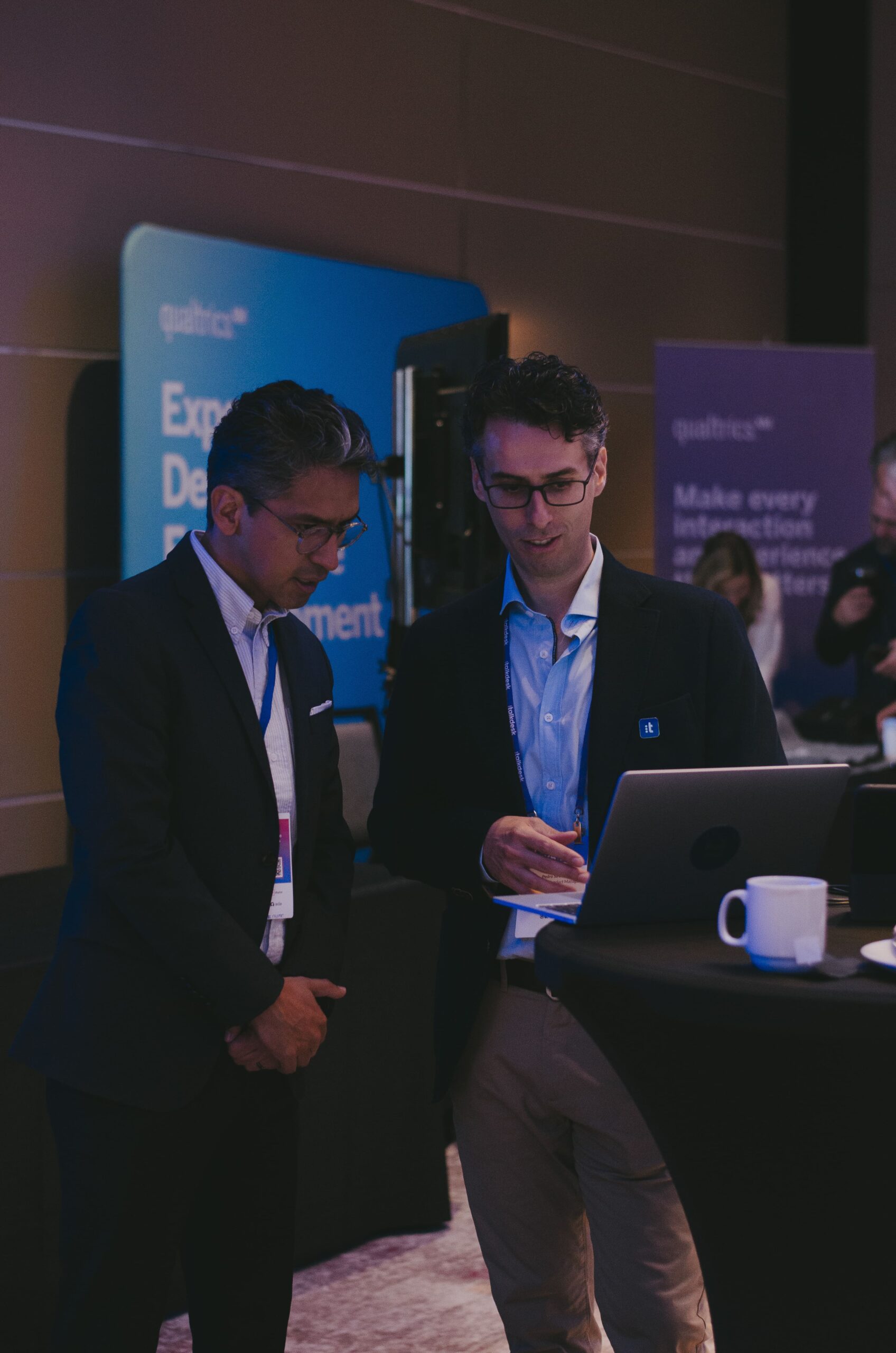
EXHIBITOR LOUNGE: VISIT BOOTHS & WIN PRIZES
- Explore sponsor demos, discuss organizational hurdles, and source practical advice.
- Enter your name for a chance to win exciting prizes.
- Take advantage of event-specific offers and special content.
1:15 pm
PANEL: SOVEREIGN AI
Send the Code, Not the Data: Healthcare’s Model for Sovereign and Trustworthy AI
Healthcare organizations need to unlock the value of AI while protecting some of the most sensitive and highly distributed data in the economy. Rather than bringing patient information together in centralized environments, emerging approaches allow algorithms and computation to travel to where trusted data already resides. Explore how healthcare can collaborate, develop AI and generate insight across institutional and jurisdictional boundaries without surrendering control of the underlying information. Walk away with a roadmap to:
- Bring analytics and AI to distributed healthcare data rather than routinely moving sensitive information into centralized environments, reducing unnecessary exposure while enabling collaboration.
- Establish the governance, standards and technical foundations required for models and insights to operate securely across organizations, jurisdictions and different technology environments.
- Enable hospitals, health systems, researchers and other partners to collectively develop and validate AI while maintaining appropriate control over data access, privacy and sovereignty.
Accelerate healthcare AI innovation, strengthen data sovereignty and protect patient trust by allowing intelligence to move across the health system while sensitive data remains securely under local control.


1:15 pm
PANEL: SCALING AI
Scaling AI Responsibly: Where Do Speed, Trust and Accountability Collide?
As AI moves from isolated experiments into core business processes, organizations face growing pressure to scale quickly without compromising trust, governance or accountability. Traditional approval processes can struggle to keep pace with rapidly evolving models and increasingly autonomous systems, while moving too quickly can introduce operational, regulatory and reputational risk. Explore how organizations can create the controls needed to scale AI confidently without allowing governance to become a barrier to innovation. Walk away with a roadmap to:
- Embed governance, risk and accountability directly into AI development and deployment so responsible practices evolve alongside innovation rather than becoming a final approval gate.
- Apply proportionate controls based on the risk and potential impact of different AI applications, balancing speed with explainability, human oversight and appropriate safeguards.
- Establish clear ownership across business, technology, data, legal and risk teams as AI becomes increasingly embedded in decisions, workflows and customer-facing services.
Accelerate responsible innovation, strengthen compliance and protect organizational trust by creating AI governance that can scale at the speed of adoption.





1:50 pm
WORKSHOP: MICROSOFT 365
Clean Data, Confident AI- How to Prepare Microsoft 365 for Copilot at Scale
The value—and risk—of Microsoft 365 Copilot depends heavily on the content and permissions it can access. Teck’s Microsoft 365 data remediation and Copilot rollout brought data governance, access management, and AI adoption together as connected parts of the same journey. Walk away with practical lessons to:
- Identify and remediate inappropriate access across Microsoft 365.
- Strengthen information governance before introducing enterprise AI.
- Coordinate remediation across technology, security, privacy, legal, and business stakeholders.
- Build greater confidence in enterprise data and permissions ahead of Copilot deployment.
Prepare your Microsoft 365 environment for responsible AI adoption without losing sight of security, compliance, or business value.


1:50 pm
WORKSHOP: BI
Beyond Dashboards: Embedding Intelligence into Frontline Decisions with AI
Organizations have invested heavily in reporting, analytics, and dashboards, yet many critical business decisions still rely on manual interpretation and fragmented information. The next evolution of analytics is embedding intelligence directly into operational workflows, enabling decision-makers to receive recommendations, predictions, and next best actions at the moment decisions are made. Walk away with a plan to:
- Why dashboards alone are often insufficient for operational decision-making.
- How to embed AI-driven recommendations into frontline processes.
- The role of generative AI, RAG, and agentic systems in decision support.
- Approaches for measuring business impact and ROI.
- Lessons learned from implementing AI solutions in regulated environments.

2:20 pm
WORKSHOP: DATA STANDARDS
How to Build the Golden Record at Enterprise Scale
Customer, asset, supplier, and operational data often remain fragmented across business units, creating duplicate records, conflicting definitions, inconsistent analytics, and unreliable automation outcomes. As enterprises accelerate AI adoption, your trusted master data is becoming essential for operational scalability, governance, and enterprise-wide intelligence. Create a roadmap to:
- Perfect master data models that scale across customer, asset, supplier, product, and operational domains.
- Eliminate duplicate records and conflicting business definitions.
- Bolster trusted data assets that support both enterprise reporting and AI-powered workflows.
- Achieve ownership, stewardship, and governance models.
Turn your fragmented operational data into a strategic enterprise asset that powers trusted analytics, automation, and AI adoption.
2:20 pm
WORKSHOP: AI MODELS
How Evaluation, Measurement, and AI Turn Models Into Business Impact
Organizations are racing to deploy AI, but most discover the hard truth only after launch: a model that wins on accuracy can still fail to move the outcomes a business depends on. As AI moves from experimentation into production, rigorous evaluation — not model size — becomes the real differentiator. Explore how layered evals, causal measurement, and experimentation frameworks let organizations know whether an AI system actually works before betting on it. Develop a blueprint to:
- Master the evaluation stack — from offline accuracy to reliability, safety, and business performance.
- Perfect the signal-to-KPI link — connecting what a model predicts to the outcomes leadership actually values.
- Enhance experimentation and monitoring to catch distribution shift, proxy failures, and metric traps before they scale.
- Achieve trust, reliability, and practical delivery — so teams can stake real decisions on their AI.

3:00 pm
EXHIBITOR LOUNGE: ATTEND VENDOR DEMOS & CONSULT INDUSTRY EXPERTS
- Attend sponsor demos, source practical expertise, and meet one-to-one with leading solution providers.
- Explore technologies supporting trusted data foundations, AI governance, real-time analytics, and enterprise automation.
- Brainstorm solutions to practical implementation challenges with specialists across the data and AI ecosystem.
3:15 pm
TRACK SESSION: LEADERSHIP
ALIGNMENT IS THE STRATEGY: How to Take a Data Team From Business Problem to Delivered Value
Data initiatives rarely struggle because organizations lack technology, data or technical expertise. More often, value is lost when data teams and the business gradually fall out of alignment — solving the wrong problem, producing outputs that aren’t adopted, or struggling to translate technical capability into measurable outcomes. Drawing on practical experience building data teams and communities, discover how to make continuous alignment the foundation for delivering value. Walk away with a roadmap to:
- Align people, processes, data and tools around clearly understood business priorities and measurable outcomes.
- Establish an operating rhythm that keeps data teams connected to stakeholders as requirements, priorities and business conditions evolve.
- Build a stronger data-driven culture by shifting the relationship between data teams and the business from service provider to strategic partner.
Move beyond simply delivering data products to build an aligned data organization that consistently turns business problems into measurable value.

3:45 pm
DATA FOR GOOD PECHA KUCHA
Small Data Projects, Big Social Impact: Real-World Stories from Data for Good Vancouver
What happens when data professionals apply their expertise to some of society’s most pressing challenges? In this fast-paced Pecha Kucha-style showcase, Data for Good Vancouver shares eight projects demonstrating how practical data, analytics and AI can help non-profits improve services, influence public policy and strengthen communities.
- Family Services of Greater Vancouver: Turning a 49-tab year-end reporting spreadsheet into a more manageable reporting process, then mentoring internal IT staff to simplify and rationalize data flows.
- First United: Using geospatial data to track renovictions, producing evidence that helped influence changes to British Columbia’s renters’ rights legislation.
- Overdose Prevention Society: Transforming daily supervised consumption records into visual evidence of zero recorded deaths in the analyzed logs, alongside surveys that helped identify and understand key stakeholders.
- BC-AI Health Sciences Subgroup: Connecting AI expertise with frontline organizations in Vancouver’s Downtown Eastside to explore how advanced technology can address urgent community needs rather than simply showcase new models.
- Special Olympics BC: Redesigning athlete and volunteer surveys to improve participation, increase response rates and generate more useful feedback.
- Rural Division of Family Practice: Developing a low-cost approach to identifying and tracking shortages of rural doctors, nurses and clinical support staff.
- Awl Together Leather: Measuring how a community of cobblers reduced leather waste and diverted reusable material from landfill.
- earth: Using semantic and ontological modelling to map food distribution across the Fraser Lowlands, identify supply-chain vulnerabilities and reveal potential single points of failure.



4:15 pm
USE CASE: RESOURCES
THE ONE-PERSON ANALYTICS TEAM: How AI Is Changing What Data Teams Can Build
Building sophisticated analytics capabilities has traditionally required specialist data scientists, engineers and significant technology investment. But AI-assisted development is beginning to change that equation. Discover how one analyst combined domain expertise, existing real estate data and AI to build a continuously refreshed analytics platform that now informs U.S. market selection and investment decisions — demonstrating how smaller teams can create capabilities that previously required far greater resources. Walk away with a roadmap to:
- Multiply the capabilities of individual analysts by using AI across coding, model testing, debugging and documentation while retaining human oversight and domain expertise.
- Build sophisticated analytics capabilities faster and with fewer resources by extracting greater value from data and technology the organization already owns.
- Translate analytics into investment decisions by designing around specific business questions, identifying market shifts and relative opportunities rather than simply producing more data and dashboards.
Discover how AI is changing the economics of analytics — shifting the constraint from the size of your data team to the quality of the questions your people can ask.


4:45 pm
CLOSING PANEL: WHO COMES OUT ON TOP
What Will Separate West Coast AI Leaders from Everyone Else by 2028?
The next wave of winners will not be defined by who bought AI first, but by who built the strongest data, governance, operational, and execution foundations. Decide which capabilities, investments, and operating models will determine long-term competitiveness. Walk away with a strategy to:
- Identify the capabilities that will define AI maturity over the next three years.
- Prioritize investment across talent, architecture, governance, automation, and real-time intelligence.
- Adapt faster than technology changes while maintaining trust, accountability, and execution discipline.
- Amplify AI strategy to regional strengths across technology, resources, public sector, healthcare, transportation, and industrial innovation.
Turn your current infrastructure decisions into tomorrow’s competitive advantage for Western Canada’s next generation of AI leaders.



5:15 pm
CLOSING COMMENTS FROM YOUR HOST
- Review the key solutions and takeaways from the conference.
- Source a summary of action points to implement in your work.
- Close the event with a clear view of the foundational data and AI priorities that will shape the year ahead.
5:45 pm